
Profiles in Biotech (9/4/23)
Analysis
Axial: https://linktr.ee/axialxyz
Axial partners with great founders and inventors. We invest in early-stage life sciences companies such as Appia Bio, Seranova Bio, Delix Therapeutics, Simcha Therapeutics, among others often when they are no more than an idea. We are fanatical about helping the rare inventor who is compelled to build their own enduring business. If you or someone you know has a great idea or company in life sciences, Axial would be excited to get to know you and possibly invest in your vision and company . We are excited to be in business with you — email us at info@axialvc.com

Metagenomi uses metagenomics to discover new gene editors. To develop potentially curative genetic medicines to accurately edit DNA where current technologies cannot.
Metagenomi's gene editing systems are derived from naturally evolved cellular machinery sourced from microbes. Revealed by their metagenomics-powered discovery platform Metagenomi then adapts these naturally evolved systems into gene editing systems with a set of advantages from ultra-small to more specific effectors. Developing therapies for cancer and genetic diseases through partnerships with companies like Moderna and Affini-T.

The N6-methyladenosine (m6A)-forming enzyme METTL3 controls myeloid differentiation of normal and leukemia cells
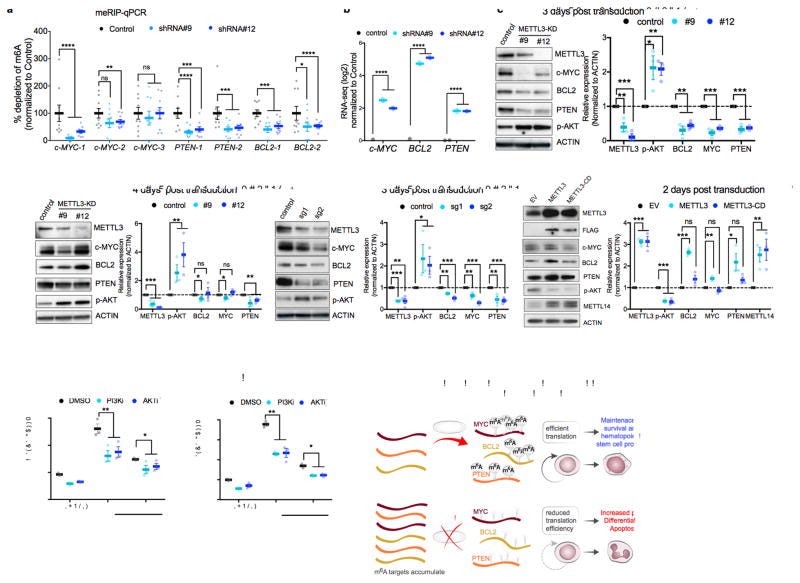
The paper reports that the m6A-forming enzyme METTL3 controls myeloid differentiation in both normal and leukemia cells. Finding that depletion of METTL3 in human hematopoietic stem/progenitor cells (HSPCs) promotes differentiation coupled with reduced proliferation. Conversely, overexpression of wild-type METTL3, but not the catalytic-dead form of METTL3, inhibits differentiation and increases cell growth.
METTL3 mRNA & protein is expressed more abundantly in acute myeloid leukemia (AML) cells compared to healthy HSPCs and other types of tumors. Furthermore, METTL3 depletion in human myeloid leukemia cell lines induces differentiation and apoptosis and delays leukemia in recipient mice in vivo.
The authors also found that m6A promotes the translation of c-MYC, BCL2 and PTEN mRNAs in human myeloid leukemia MOLM13 cells. Moreover, loss of METTL3 leads to increased levels of pAKT, which contributes to the differentiation effects of METTL3 depletion. Suggesting that METTL3 is a key regulator of myeloid differentiation and that targeting METTL3 may be a therapeutic strategy for AML.
https://www.nature.com/articles/nm.4416
High-throughput screening of regulatory element function with epigenome editing technologies
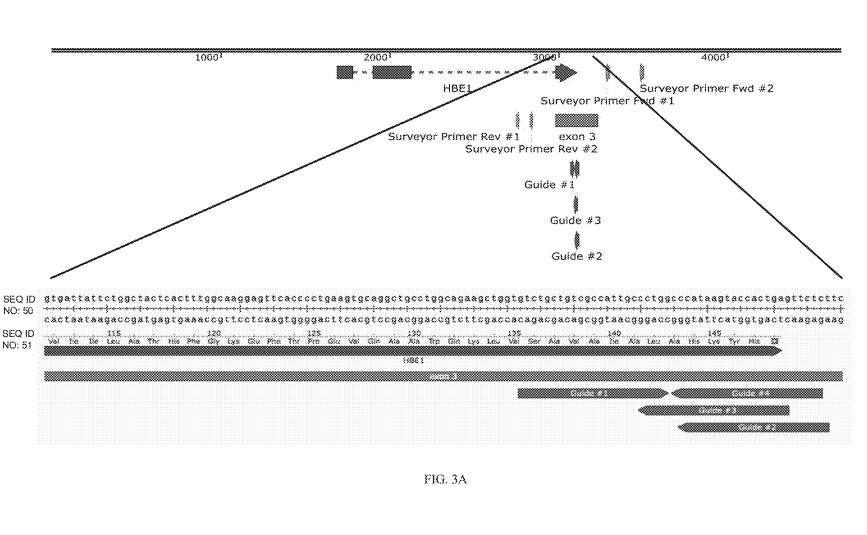
The patent describes a method for using CRISPR/Cas9-based epigenomic editing systems to screen for regulatory elements that modulate a phenotype: contacting a plurality of modified target cells with a library of single guide RNAs (sgRNAs) that target a plurality of gene regulatory elements within the genome. Then generating a plurality of test cells & selecting a population of test cells or an organism having a modulated phenotype. Finally, identifying/characterizing the sgRNAs within the population of selected test cells or the organism thereby identifying the gene regulatory elements that modulate the phenotype.
The modified target cells or organism includes a fusion protein, the fusion protein comprising a first polypeptide domain comprising a nuclease-deficient Cas9 and a second polypeptide domain having an activity selected from the group consisting of transcription/epigenetic regulatory activity. Providing an example. To screen for regulatory elements that control the expression of the epsilon globin gene in human K562 erythroid cells.
https://patentimages.storage.googleapis.com/40/54/6f/10137714d08ef0/US10676735.pdf
How does RNA fold?
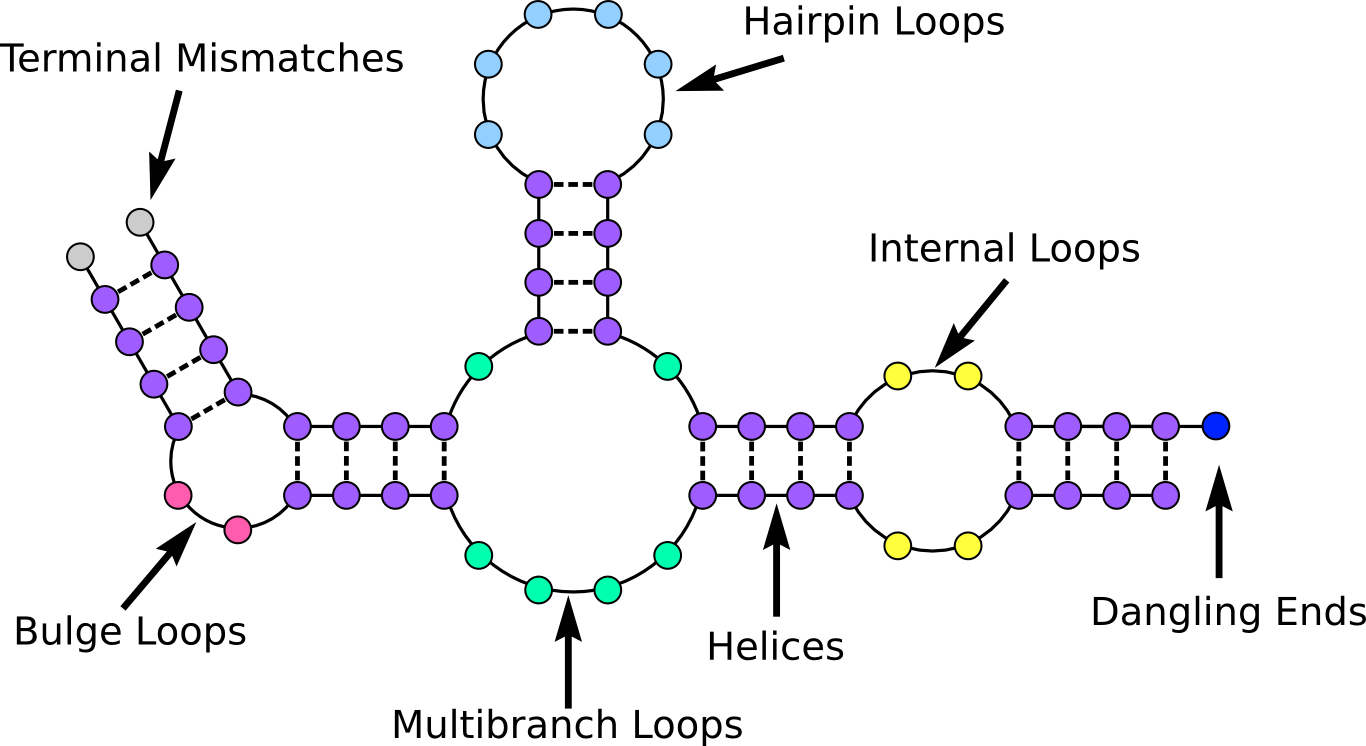
RNA folds in a hierarchical manner, with the formation of secondary structure occurring first, followed by tertiary structure:
- Secondary structure: local folding of RNA into double-stranded regions called helices and single-stranded regions called loops. The formation of secondary structure is driven by the base-pairing interactions between complementary nucleotides.
- Tertiary structure: overall folding of RNA into a 3D shape. The formation of tertiary structure is driven by a variety of interactions, including base-pairing, stacking interactions between nucleotides, and interactions with proteins and other molecules.
The sequence of the RNA molecule determines the potential base-pairing interactions that can occur. Some sequences are more likely to form stable secondary structures than others. While the environment in which the RNA is folding can affect the stability of its secondary & tertiary structures. For example, the presence of ions or other molecules can stabilize or destabilize specific interactions. The presence of other molecules, such as proteins or other RNA molecules, can also affect the folding of RNA. For example, proteins can bind to RNA and help to stabilize its structure.
The folding of RNA is a dynamic process that is constantly changing. The RNA molecule can fold and unfold in response to changes in its environment or interactions with other molecules. This dynamic folding is essential for the function of RNA molecules. For example, RNA involved in gene expression, such as messenger RNA (mRNA) and transfer RNA (tRNA), need to fold into specific structures in order to be translated into proteins. Some RNA molecules, such as ribozymes, can act as enzymes. These RNA molecules fold into specific structures that allow them to catalyze chemical reactions. By understanding how RNA folds, we can better understand how RNA molecules function and how they can be manipulated to create new therapies and technologies.
Founder Stories: Parag Mallick, Nautilus Biotechnology & Building a Proteomics Company
Mallick is Founder & Chief Scientist of Nautilus and an Associate Professor at Stanford University. Developing multi-scale approaches to accelerate the discovery of diagnostic and prognostic protein biomarkers