
Profiles in Biotech (9/14/23)
Analysis
Axial: https://linktr.ee/axialxyz
Axial partners with great founders and inventors. We invest in early-stage life sciences companies such as Appia Bio, Seranova Bio, Delix Therapeutics, Simcha Therapeutics, among others often when they are no more than an idea. We are fanatical about helping the rare inventor who is compelled to build their own enduring business. If you or someone you know has a great idea or company in life sciences, Axial would be excited to get to know you and possibly invest in your vision and company . We are excited to be in business with you — email us at info@axialvc.com

Arbutus Biopharma's delivery technology has powered transformative medicines across the disease spectrum. Founded in 2007 with a complex corporate history - originally named Tekmira & spinning out of Inex Pharmaceuticals who was developing liposome formulations of cancer drugs and also getting RNAi IP from Lynx Therapeutics.
Signing a licensing agreement with Alnylam in 2007 for their RNAi drugs. And also working with companies like Alexion and Vaccitech. Entering a cross-licensing deal with Genevant in 2018 - Arbutus owns something like ~20% of the company; where Genevant has partnered with companies like BioNTech, Gritstone, and Takeda. Seemingly to let Arbutus focus on its internal HBV pipeline and have Genevant take the reins on the licensing business. That has generated >$100M in revenue so far and seems to be just getting started.

Geometric deep learning of RNA structure
This paper invents a new machine learning approach for predicting the accuracy of structural models of RNA. The approach, called the Atomic Rotationally Equivariant Scorer (ARES), is based on a deep neural network that learns directly from 3D structures. ARES does not require any assumptions about which structural characteristics are relevant to assessing accuracy, and it can be trained using a very small amount of experimental data.
ARES is trained on a dataset of 18 RNA structures for which experimentally determined structures are available. The network is then used to score candidate structural models of other RNAs. ARES outperforms three state-of-the-art scoring functions on a benchmark of RNA structures that were not included in the training set. Demonstrating that ARES can be used to improve the accuracy of RNA structure prediction by selecting the most accurate models from a pool of candidate models. They also show that ARES can be used to identify new RNA structures that are difficult to predict using traditional methods.
Concluding that ARES is a powerful new tool for RNA structure prediction and analysis. Particularly well-suited for predicting the structures of RNAs that are difficult to study experimentally. And a significant advance in the field of RNA structure prediction. ARES is the first scoring function that can learn directly from 3D structures and be trained using a very small amount of data. And could lead to new insights into the mechanisms of RNA function and the development of new RNA-targeted drugs.
https://www.science.org/doi/10.1126/science.abe5650

Branched tail lipid compounds and compositions for intracellular delivery of therapeutic agents
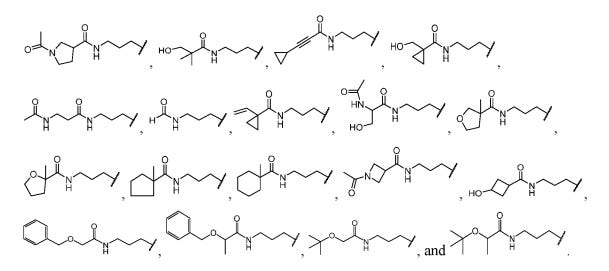
This patent discloses branched tail lipid compounds. That can be used to form lipid nanoparticles (LNP) that can efficiently deliver therapeutic agents to cells.
The branched tail lipid compounds have a unique structure that allows them to self-assemble into LNP with desirable properties, such as high stability and low toxicity. And can be loaded with a variety of therapeutic agents, including nucleic acids, proteins, and small molecules.
The patent also provides data showing that LNP comprising the branched tail lipid compounds of the invention can efficiently deliver therapeutics to cells in vitro and in vivo. For example, the LNP were able to deliver mRNA encoding green fluorescent protein (GFP) to HeLa cells in human serum, resulting in high levels of GFP expression.
With potential applications to deliver nucleic acids like mRNA & siRNA to biologics and small molecules. Delivering these molecules directly to cells (in theory), bypassing the need for systemic delivery.
https://patentimages.storage.googleapis.com/aa/c1/01/af5d7373e06cea/WO2022204288A1.pdf
How is mRNA manufactured?
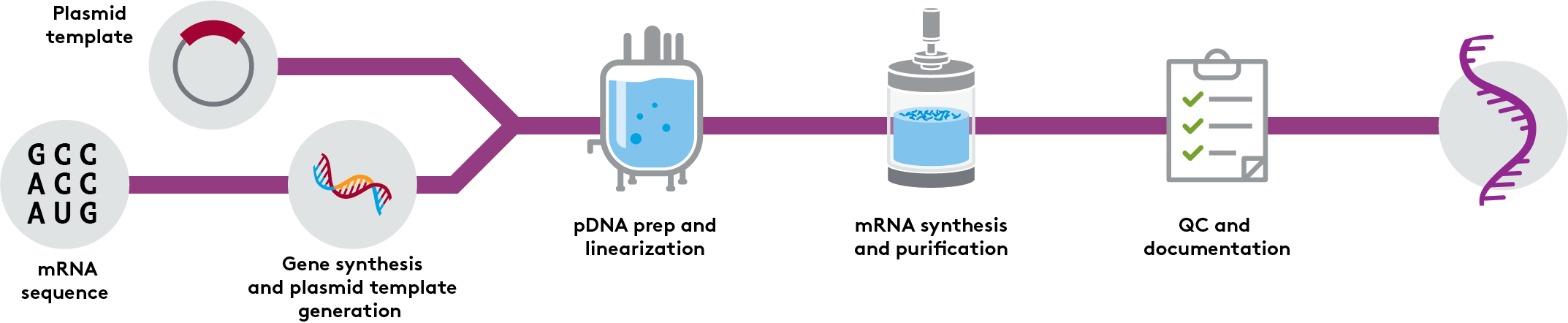
The most common method to produce mRNA is with in vitro transcription (IVT). IVT uses a DNA template to synthesize mRNA in a test tube. The first step is to synthesize a DNA template. This can be done using a variety of methods, such as PCR or cloning. The DNA template is then used to generate mRNA using a transcription enzyme. The transcription enzyme binds to the DNA template and synthesizes RNA using nucleotides. The RNA is then released from the transcription enzyme and purified. The purified mRNA can then be formulated with LNPs for cell delivery:
1. DNA template preparation
2. RNA synthesis
3. mRNA purification: concentrated and purified using a variety of methods, such as gel electrophoresis or chromatography
4. LNP formation: made up of lipids that surround and protect the mRNA
Founder Stories: Tassos Gianakakos, CEO of MyoKardia
MyoKardia pioneered a precision medicine approach to discovering and development novel therapies for heart conditions and was acquired by BMS in October of 2021 for $13.5B