
Modified integrin polypeptides, modified integrin polypeptide dimers, and uses thereof
Inventors & their inventions
Axial: https://linktr.ee/axialxyz
Axial partners with great founders and inventors. We invest in early-stage life sciences companies such as Appia Bio, Seranova Bio, Delix Therapeutics, Simcha Therapeutics, among others often when they are no more than an idea. We are fanatical about helping the rare inventor who is compelled to build their own enduring business. If you or someone you know has a great idea or company in life sciences, Axial would be excited to get to know you and possibly invest in your vision and company. We are excited to be in business with you — email us at info@axialvc.com
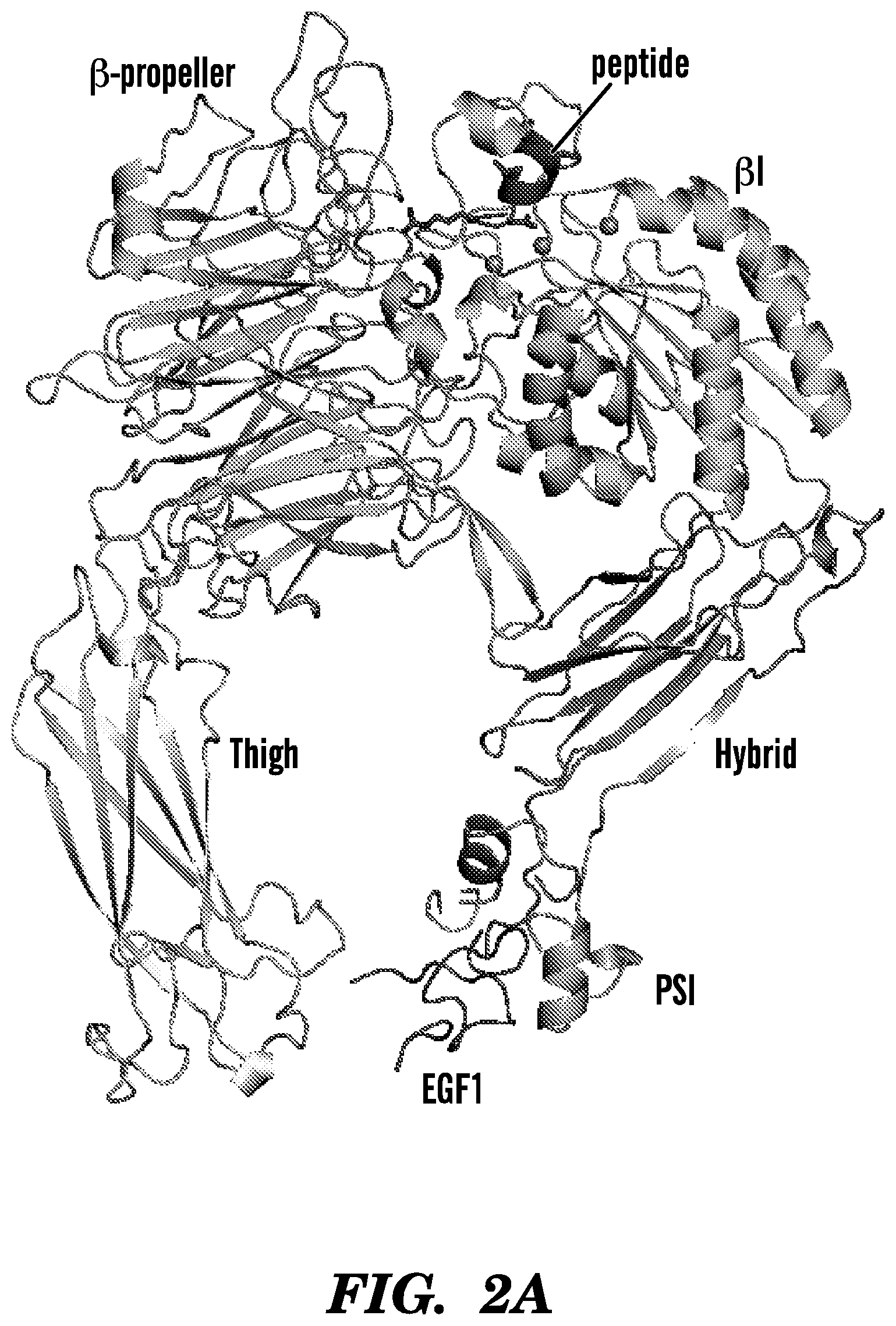
This patent describes modified integrin polypeptides, polypeptide dimers, and their uses. Integrins are cell surface receptors that mediate cell-cell and cell-extracellular matrix interactions. They play important roles in regulating cell adhesion, migration, proliferation, differentiation, and survival. Dysregulated integrin signaling is implicated in many diseases. The wild-type integrin heterodimers consist of noncovalently linked α and β subunits that can dissociate, making it challenging to study integrin structure and interactions.
The inventors have engineered modified integrin polypeptides by introducing cysteine mutations to enable covalent disulfide bond formation between the α and β subunits. This prevents subunit dissociation and enables formation of stable, crystallizable integrin heterodimers. The cysteine substitutions are designed based on the crystal structure to be distal from the ligand binding site, so they do not impair ligand interactions. The patent provides modified αV and β6 subunit polypeptides as examples. Various cysteine mutation combinations are described that enable heterodimerization of full-length or fragment polypeptides containing key integrin headpiece domains. Importantly, the disulfide-linked heterodimers retain integrin binding capabilities, allowing their use in biochemical and structural studies.
The stabilized integrin heterodimers have significant advantages over the wild-type proteins. Their irreversible α/β linkage allows reliable use in ligand screening and binding assays. The heterodimers can be crystallized, enabling high-resolution structure determination not possible with reversibly associating wild-type integrins. The patent presents detailed X-ray crystal structures of engineered αVβ6, αVβ3, and αVβ8 heterodimers, revealing molecular interactions and ligand binding sites.
The αVβ6 structure showed how the β6 subunit uniquely recognizes the RGD motif in latent TGF-β ligands. Key specificity-determining regions called SDL1, SDL2, and SDL3 were identified that confer αVβ6's high pro-TGF-β binding affinity and specificity compared to αVβ3. The β6 hydrophobic binding pocket and ligand interactions were defined. An αVβ3 structure at 1.9 Å resolution revealed details not previously seen. Overall, the stabilized heterodimers enabled elucidation of integrin binding sites, conformations, and subunit interactions at an unprecedented level.
The patent claims modified integrin polypeptides, dimers, complexes, compositions, and methods using them for:
- Determining whether a ligand/inhibitor binds an integrin
- Measuring binding affinities
- Screening for novel modulators
- Designing optimized inhibitors
- X-ray crystallography and structural studies
- Identifying binding sites and pharmacophore models
Specific applications demonstrated include crystallizing αVβ6, αVβ3, or αVβ8 with a ligand, and using the structure to design an αVβ6 inhibitor pharmacophore. The models and insights gained can guide development of new anti-integrin therapeutics.
Overall, this patent discloses modified integrin polypeptides that overcome challenges with the natural proteins. The disulfide-stabilized heterodimers enable robust structural, interaction, and screening studies not previously possible. The detailed molecular information provided advances understanding of integrin binding specificity and facilitates rational inhibitor design. This could ultimately lead to new integrin-targeted drugs for cancer, fibrosis, inflammation, thrombosis, and other diseases. The concepts of engineering stabilizing disulfides could also be applied to study other receptor complexes.
https://patents.google.com/patent/US20220064261A1/en
