
Learning by Observing
Call for talented individuals and teams
Axial: https://linktr.ee/axialxyz
Axial partners with great founders and inventors. We invest in early-stage life sciences companies such as Appia Bio, Seranova Bio, Delix Therapeutics, Simcha Therapeutics, among others often when they are no more than an idea. We are fanatical about helping the rare inventor who is compelled to build their own enduring business. If you or someone you know has a great idea or company in life sciences, Axial would be excited to get to know you and possibly invest in your vision and company. We are excited to be in business with you — email us at info@axialvc.com
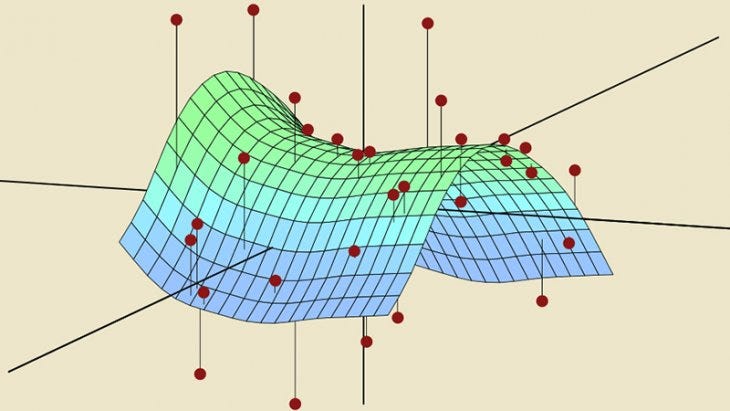
A new class of biotech companies has emerged that use advances in computation and artificial intelligence to accelerate biological discovery. These companies are distinguished by their focus on building platforms that integrate statistical modeling and large-scale data generation to efficiently search vast biological hypothesis spaces.
At the core of this approach is the construction of an in silico model of the biological system of interest. This model is trained on proprietary data generated in-house, allowing for quantitative predictions about the outcomes of hypothetical experiments. The model enables an iterative loop of prediction and validation, where the most promising experiments are tested to generate new data that further improves model accuracy.
This predict-validate cycle confers several advantages that accelerate the pace and efficiency of discovery compared to traditional biotechs:
1. Faster hypothesis generation - In silico models can propose intelligent new hypotheses orders of magnitude faster than human researchers alone. This increases the number of promising ideas that can be tested.
2. Improved experimental prioritization - With an in silico assistant, experimental resources can be allocated more optimally versus guessing based on intuition. The most informative experiments are prioritized.
3. Compounding returns to scale - As the internal database grows, model accuracy improves, allowing generation of better hypotheses and more focused experiments. This positive feedback loop creates a self-reinforcing flywheel.
4. Defensible moats - The proprietary data corpus and predictive models create durable competitive advantages that persist across programs, unlike traditional biotech IP.
These properties allow tech native biotechs to efficiently search vast hypothesis spaces intractable to human exploration alone. While the in silico approach cannot eliminate costly validation studies, it maximizes the yield from available resources. Building a predictive engine requires significant upfront investment, including computational infrastructure and generation of training data. This raises the capital requirements for these companies versus traditional biotechs focused on singular assets. However, the long-term payoff is potentially reduced costs for later programs.
One risk is that the in silico models may not achieve sufficient accuracy to guide experiments in complex biological domains. This highlights the need for tight integration between computation and lab to ensure model predictions match experimental results. Human insight remains critical to identify when model assumptions fail.
As computational power increases, deriving insights from data at scale rather than relying on human intuition alone becomes more advantageous. Tech-native biotechs are pioneering the application of this paradigm to biotech's immense hypothesis spaces. If the model-driven approach lives up to its potential, tech-native biotechs could drive step-change improvements in the pace and efficiency of bioinnovation.
