Axial - Observations #8
Life sciences reflections
Build with Axial: https://axial22.axialvc.com/
Axial partners with great founders and inventors. We invest in early-stage life sciences companies such as Appia Bio, Seranova Bio, Delix Therapeutics, Simcha Therapeutics, among others often when they are no more than an idea. We are fanatical about helping the rare inventor who is compelled to build their own enduring business. If you or someone you know has a great idea or company in life sciences, Axial would be excited to get to know you and possibly invest in your vision and company . We are excited to be in business with you - email us at info@axialvc.com
Observations #8
A set of ideas and observations from a week’s worth of work analyzing businesses and technologies.
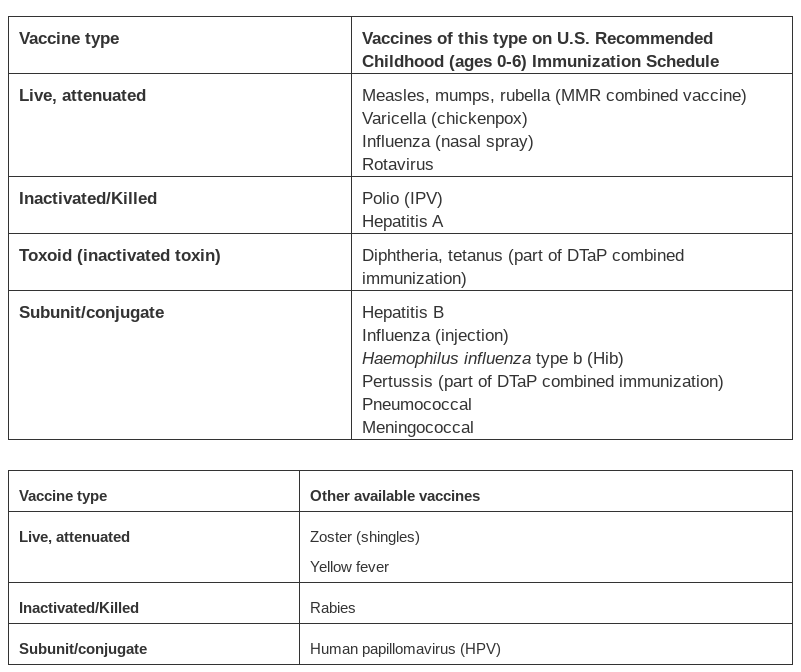
Live-attenuated and inactivated vaccines
Live-attenuated and inactivated (LAI) vaccines are an old technology that will probably solve the new problem of COVID-19. I’m just not sure what the timeline is - 18 months or 5 years? This is where new modalities have an advantage acceleration to the clinic. It’s the difference between a 718 and a Cayenne. I’m pretty excited to see how the AAV-based vaccines work against COVID-19. However, the best shot for a successful vaccine is probably a live-attenuated or inactivated vaccine.
The process to invent a successful LAI vaccine has to focus on safety because you’re putting the virus itself into a patient and is a trial-and-error process to figure out which components are essential to activate a good immune response while not potentially killing the patient. Whereas, an mRNA vaccine just involves printing RNA that encodes certain proteins that might elicit an immune response. Or an antibody vaccine just needs to bind a target or set of targets on the virus to inhibit its activity.
However, the results for LAI vaccines speak for themselves. One of the most successful examples is the polio vaccine. Over the last ~30 years the cases of polio-related paralysis has dropped by more than 99% to a little over 100 cases now.
The two major vaccines for polio are:
Live attenuated oral poliovirus vaccine (OPV)
Inactivated poliovirus vaccine (IPV)
OPV is a little more riskier to use given it can mutate into its mutated form. Attenuated viruses are generated from passaging the virus through non-human cell cultures and selected for variants that replicate well in other cell cultures and no longer replicates in human cell lines. OPV is cheaper and generates longer lasting immunity by eliciting an immune response through the gut; however due to the risks OPV is no longer used in the US. IPV is generated by inactivating the virus using heat or chemicals to get rid of its ability to replicate but still retains its structural form. IPV cannot replicate and therefore, can’t revert back to become virulent. As a result, inactivated vaccines like IPV doesn’t create long lasting immunity and require booster shots.
Everlywell and Scanwell and at home tests
There are countless headlines of new diagnostics tests being developed or approved. This is all great, but how will patients get access. Through hospitals? Quest/LabCorp? At home tests? Their needs to be a CLIA lab in the process of testing patients. Companies like Everlywell and Scanwell have introduced interesting tests for COVID-19 but have not seen the uptake from patients or approval from the FDA. At home tests especially for something like COVID-19 might be a little too early.
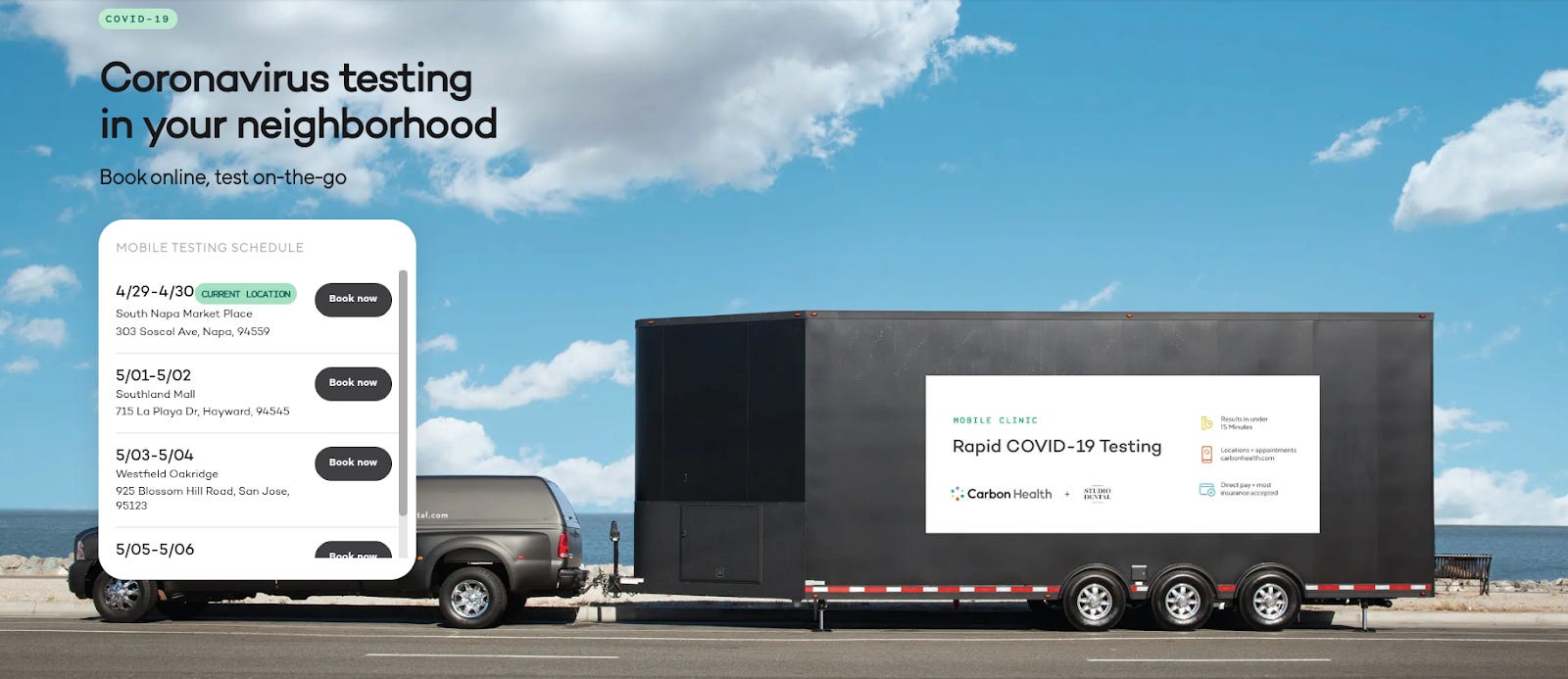
An interesting model is being done by Carbon Health to haul a CLIA lab to sites to increase testing accessibility - https://carbonhealth.com/mobile-clinic#click=https://t.co/93pjMYH9Vv
To get people back to work, accessible testing is needed. However, current infrastructure is capable but not coordinated in a way to solve this problem quickly. Are there business models to make COVID-19 diagnostics accessible and build other services around the test like co-location and employer verification?
Ribosome engineering
Engineering restriction enzymes transformed our ability to use DNA for commercial applications.
Engineering polymerases transformed our ability to use RNA similarly.
Engineering ribosomes is moving forward in a way that suggests that the emerging toolkit can have a similar impact that cloning and IVT had on biotechnology. It seems we’re at the stage where technology development is still needed and old business models (i.e. reagents, tools) can be used to validate the idea of engineering a ribosome.
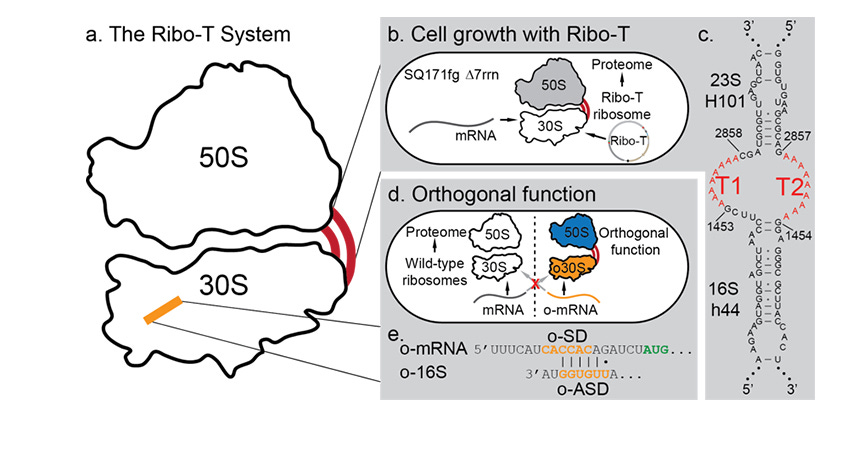
First, what is ribosome engineering? The ribosome is composed of two subunits - large and small and in bacteria, 50S and 30S as well as a 16S rRNA. The ribosome uses this dual subunit structure to recognize a wide set of substrates from mRNAs to tRNAs to bring an amino acid to the amino acids themselves to convert the mRNA code into proteins. This offers a lot of points of contact to add new capabilities to the ribosome:
Use a different mRNA code
Recognize a wider set of amino acids and possibly introduce new types of chemical bonds within and between them
Generate polymers that aren’t proteins
Rev up the ribosome to produce more protein
Create orthogonal protein production pathways within the cell
Playing around with the 16S rRNA sequence to redirect a small proportion of small subunits of the ribosome to translate a different class of mRNAs and sometimes using the rRNA to selectively fuse two subunits
The cutting edge toolkit for ribosome engineering is tethering - https://www.ncbi.nlm.nih.gov/pubmed/26222032?dopt=Abstract The premise is to fuse the rRNAs of the large and subunit to tether them and create an orthogonal ribosome system. With this platform, one could do gain-of-function (GoF) screening to find ribosome variants that do things you want them to do. The hard part is avoiding translation termination and finding the balance between mutating the ribosome and reducing its capacity to make protein. A large bottleneck has been the inability to create a truly orthogonal 50S subunit. Then most tethered ribosome platforms translate proteins a little over half the rate of dissociable equivalents and have lower biogenesis rates. So to bring the power of ribosome engineering to new products:
Invent an orthogonal large subunit of the ribosome
Ability to screen for GoF without significantly affecting translation and biogenesis rates