
Axial - Observations #5
Life sciences reflections
Build with Axial: https://axial22.axialvc.com/
Axial partners with great founders and inventors. We invest in early-stage life sciences companies such as Appia Bio, Seranova Bio, Delix Therapeutics, Simcha Therapeutics, among others often when they are no more than an idea. We are fanatical about helping the rare inventor who is compelled to build their own enduring business. If you or someone you know has a great idea or company in life sciences, Axial would be excited to get to know you and possibly invest in your vision and company . We are excited to be in business with you - email us at info@axialvc.com
Observations #5
Every Friday morning a set of ideas and observations from a week’s worth of work analyzing businesses and technologies.
How foundations can drive new business models and better medicines
Can venture philanthropy and foundations become a major source of capital for drug development? AskBio was initially funded by the Muscular Dystrophy Foundation. Spark by Children’s Hospital of Philadelphia. Vertex by Cystic Fibrosis Foundation (via the Aurora acquisition).
The Cystic Fibrosis Foundation (CFF) was one of the pioneers that has compelled other foundations to follow suit. Beyond the return the CFF saw - investing $150M and getting over $3B back. About 2-3 decades ago, drug companies were not willing to pursue cystic fibrosis due to the small patient population and scientific risk. To incentive work in the field, the CFF invested $150M in Aurora then Vertex to fund R&D work that ultimately led to two approved medicines for cystic fibrosis - Kalyeco and Orkambi.
The CFF is the best example of venture philanthropy. Others have had success with most pursuing rare diseases. The premise of venture philanthropy is to aggregate patients from rare/underappreciated diseases to give them more power and influence over the standard-of-care. However, one issue is around incentives? Does the foundation look after its investment or focus on access. For CFF, despite the financial returns, the prices of Kalyeco and Orkambi are ~$300K per year.
Essentially, foundations take public donations to help a specific group of people. Are there models where a foundation can own the entire process from discovery to approval instead of relying on external investments that might come with misaligned incentives? Could public benefit corporations be spun up with foundations backing them?
Mass spectrometry
Mass spectrometry (MS) is a tool to quantitatively measure metabolites and proteins in an unbiased way. The ability to use MS to identify molecules where immunoassays have trouble has already been transformational in the clinic. MS is the preferred method to measure testosterone and other steroids. The tool is also useful to confirm immunoassays and ID new microbes. GS-MS was the initial method used, but had the limitation of needing volatile (low boiling point so evaporate easily) analytes. This created a major bottleneck in sample prep. LC-MS combined with electrospray ionization (ESI) sidestepped this issue and made MS clinically viable. Beyond ESI, other methods have emerged to increase MS’s capabilities:
Electrospray ionization - https://en.wikipedia.org/wiki/Electrospray_ionization - high voltage applied to the sample to create an ionized aerosol that can be detected
Laser diode thermal desorption (LDTD) - https://www.ncbi.nlm.nih.gov/pubmed/25217542 - not sure how this is different than MALDI but it seems the inject speeds are better (1 per second versus 2)
Matrix-assisted laser desorption ionization (MALDI) - https://en.wikipedia.org/wiki/Matrix-assisted_laser_desorption/ionization - similar to ESI but results in less multi-charged ions that can make it hard to deconvolute a MS data set
The Agilent RapidFire ($200K-$500K depending on goodies; LCs cost ~$50K) product line seems to be the commercially viable MS tool. It uses ESI to inject samples into the mass spec every 10 seconds. It seems biopharma buys this tool for small molecule screens. MS is used pretty widely in drug development and scaling the tool would help the process of discovering chemical matter and making it drug-like easier. However, what would scale up MS to become a clinical diagnostics tool? A key bottleneck is the rate of injecting samples into the detector. MALDI and LDTD solves this problem then face their own issues with additional sample prep time to deposit the analyte and process it to specifically be overlaid on a surface before a run. I wish I knew the cost of a MS run for a lysate. But there still exists pretty substantial bottlenecks in MS before it is ready for the clinic - things like new proteomic biomarkers for oncology.
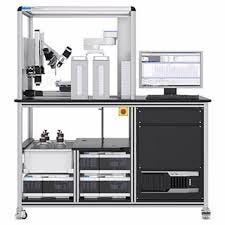
Source: Agilent
Security and healthcare
Hospitals still use software from decades ago; however, they store some of our most sensitive data. I remember reading news that a software company (Onlinevitalus) was exposing hundreds of thousands of birth certificate applications through an S3 bucket - https://techcrunch.com/2019/12/09/birth-certificate-applications-exposed/ Beyond this, networks, hospitals, and even small clinics have FTP servers as easy targets to steal health data that can be used for insurance fraud, steal an identity, misuse drug prescriptions, and beyond. Tens of billions of dollars are spent on cybersecurity in healthcare. Are payors and networks properly incentivized to solve security or just keep healthcare inflation going? Are the products being built out solving specific problems around healthcare? Companies like Medcrypt are on it.
Digital health
Why hasn’t the potential of digital health been realized? This question touches upon the transition from fee-for-service to fee-for-value. The underlying reasons include:
The incentives of insurance companies - payors have a lot of power
Provider margins - networks don’t want to try new things
So-far-difficult methods to build a full-stack model from scratch - capital intensive
This all points to how payors in the US are incentivized and could be a reason why I see some data/anecdotal evidence that digital health companies have an easier going in Europe. Before COVID-19, telemedicine utilization rates in the US were below 10% and 2x-3x more in Europe depending on the region - https://ec.europa.eu/health/sites/health/files/ehealth/docs/2018_provision_marketstudy_telemedicine_en.pdf
Simply, in the US, insurers can only keep 20% of the premiums they collect for profits and SG&A. As a result, they need to increase the use of healthcare to increase their profits. More healthcare spend means higher premium which means more profits. In this backdrop, new pieces of technology rarely have a shot to create value. The successful healthcare IT/digital health companies have done well by increasing healthcare use and indirectly increasing premiums for payors. A tool that can really reduce healthcare spend often face many issues with payors and reimbursement. Drugs are a little buffered from this phenomenon because they have an FDA approval process and don’t rely entirely on payors for product adoption.
What types of business models can make a dent in this problem and bring digital tools to patients?:
Direct-to-consumer - companies like Roman, Lemonaid, and Hims
A standalone insurance company - Oscar is the canonical example
Full-stack healthcare company meaning using software to enable a service - companies like Virta Health (they have been extremely successful by focusing on clinical data and published studies)
Aggregate clinicians/providers and create a network patients can access
The main issue for each model is the type of patient served. A person looking for Viagra is an easy customer to deliver a product to and not that risky in terms of health. On the other end of the spectrum is a T2D patient. What set of businesses need to be created to revamp the existing incentive structures of healthcare?
MRI
Why have MRI costs gone down? I really don’t know the real answer. Looking at the prices of a test from Medicare, the price of an MRI has gone from $3K from 10-20 years ago to less than $500. MRI seems to be one of the success stories of technological progress making a dent in healthcare. Maybe MRI volume drives volume somewhere else?