Axial - Observations #37
Life sciences reflections
Build with Axial: https://axial22.axialvc.com/
Axial partners with great founders and inventors. We invest in early-stage life sciences companies such as Appia Bio, Seranova Bio, Delix Therapeutics, Simcha Therapeutics, among others often when they are no more than an idea. We are fanatical about helping the rare inventor who is compelled to build their own enduring business. If you or someone you know has a great idea or company in life sciences, Axial would be excited to get to know you and possibly invest in your vision and company . We are excited to be in business with you - email us at info@axialvc.com
Observations #37
A set of ideas and observations from a week’s worth of work analyzing businesses and technologies.
Kidney disease
Kidney disease affects over 30M people in the US and accounts for over $100M in annual healthcare costs. Without effective treatments, patients have to undergo procedures like dialysis and transplantation that lower a patient’s quality of life and lead to high healthcare costs. Excitedly, new tools combined with genomics has led to an improving understanding of kidney biology. Combined with new surrogate endpoints, drug development in kidney disease is set up to transform patient lives.
Companies like Goldfinch Bio, Chinook Therapeutics, Purespring Therapeutics, and Walden Biosciences are bringing new tools to develop medicines particularly for rare kidney diseases with defined clinical development milestones:
Genomics: several GWAS studies have been done to discover new genetic variants driving kidney diseases - targets, pathways, and MoAs - https://pubmed.ncbi.nlm.nih.gov/22143329/
Proteomics: kidney-generated proteins are useful signals of how the disease has progressed. For example, the CKD273 classifier, based on 273 urinary peptides, has been shown to be useful to detect chronic kidney disease (CKD) early - https://pubmed.ncbi.nlm.nih.gov/23690958/
Metabolomics: this is the toolkit that is theoretically most tractable given that there are ~10^3 metabolites versus ~10^4 genes and ~10^6 proteins. A few metabolites that are indicative of certain kidney diseases are γ-butyrobetaine, citrulline, and kynurenine - https://pubmed.ncbi.nlm.nih.gov/23052862/
Within kidney disease, the big opportunity is CKD. Current treatments only delay the onset of end-stage renal failure and have some really bad side effects. Around 20M in the US have CKD with 500K of them having end-stage versions, which requires dialysis or a transplant. For CKD, new MoAs to pursue are (inhibiting the renin–angiotensin–aldosterone pathway has been the traditional approach centered around blood pressure): loss of podocytes and renal epithelial cells, chemokines, JAK inhibitors, and ECM deposition. Who is building omics platform businesses to cure kidney disease?
Royalty aggregators
Drugs, and any product/company in general, can be viewed as a stream of cash flow over its lifetime. By having so much technical risk combined with IP monopolies if approved, drugs are a rich place to executive unique royalty deals: the drug developer can take some money off the table and the purchaser can acquire a potential lottery ticket winner with a set amount of investment. However, the market pricing mechanism is still pretty inefficient here. There is a massive opportunity to bring the software practices of Opendoor and Affirm to drug royalties. Is there anyone out there that is doing this or wants to?
Key parts of a royalty are:
The royalty rate and type - fixed versus tiered
Duration - how long the royalty agreement lasts?
Type of IP - is the royalty on a patent, trademark, or something else?
Product stage - preclinical, clinical, approved, on the market
Potential profitability - is your product pursuing a large and underserved market? You might be able to negotiate a lower royalty rate.
Exclusivity - is the royalty agreement exclusive for the use of IP? Just in case a similar product is developed; this is more downside protection.
Royalty Pharma is the market leader for late-stage and approved products. Ligand Pharmaceuticals for mid-stage products. And XOMA has emerged as a leader for early-stage products. There is also an opportunity to build a similar business model for preclinical products (this is a space where a company can help an inventor benefit from the work).
What is Life? cont.
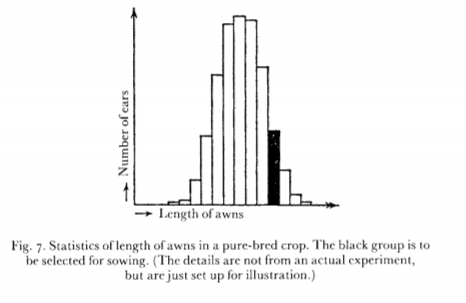
In Chapter 3 (Mutations) of What is Life?, Schrödinger expands upon Chapter 2 where he argues that a gene has to be both small (to have diversity) and have long-term stability (to be transferred across generations). He explains that Darwinian evolution acts on discrete and abrupt genetic mutations versus continuous - the idea is that a mutation is a stepwise process from one form to another without going through intermediates. This bears a lot of similarity to quantum therapy and energy levels of electrons. Maybe this is why Schrödinger had such a strong intuition on genetics so early?
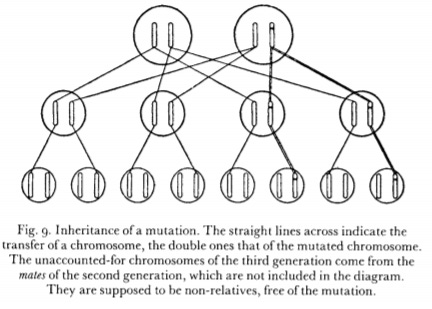
The chapter then delves into meiosis: how a diploid cell divides into two daughter cells each with a chromosome. So one haploid cell can contain “mutated code” that can be recessive enabling a deleterious mutation to accumulate over multiple generations and show up once there is some level of inbreeding. With this framing, Schrödinger expands upon the frequency of mutations:
“In order to be suitable material for the work of natural selection, mutations must be rare events, as they actually are. If they were so frequent that there was a considerable chance of, say, a dozen of different mutations occurring in the same individual, the injurious ones would, as a rule, predominate over the advantageous ones and the species, instead of being improved by selection, would remain unimproved, or would perish. The comparative conservatism which results from the high degree of permanence of the genes is essential. An analogy might be sought in the working of a large manufacturing plant in a factory. For developing better methods, innovations, even ifas yet unproved, must be tried out. But in order to ascertain whether the innovations improve or decrease the output, it is essential that they should be introduced one at a time, while all the other parts of the mechanism are kept constant.”
Schrödinger argues that mutations have to be rare in order to favorable ones to expand within a population and harmful ones to be sorted out quickly by natural selection
Schrödinger also uses X-rays as an example of increasing the frequency of mutations leading to harmful effects in offspring