Axial - Observations #30
Life sciences reflections
Build with Axial: https://axial22.axialvc.com/
Axial partners with great founders and inventors. We invest in early-stage life sciences companies such as Appia Bio, Seranova Bio, Delix Therapeutics, Simcha Therapeutics, among others often when they are no more than an idea. We are fanatical about helping the rare inventor who is compelled to build their own enduring business. If you or someone you know has a great idea or company in life sciences, Axial would be excited to get to know you and possibly invest in your vision and company . We are excited to be in business with you - email us at info@axialvc.com
Observations #30
A set of ideas and observations from a week’s worth of work analyzing businesses and technologies.
Dermatology and the microbiome
The microbiome is an unexplored, and at times overhyped, field in life sciences. It realized the potential of the microbiome now, finding the right places to focus on is important. In medicine, simply focusing on areas where microbes drive the pathology of a disease is probably the right framework. Seres’ recent success in C. diff - https://www.businesswire.com/news/home/20200911005082/en/Seres-Therapeutics-Announces-U.S.-Food-and-Drug-Administration-Correspondence-Following-Positive-SER-109-Phase-3-Study-Results is an important development for the microbiome field in general. New medicines targeting that microbiome are poised to transform the lives of patients with GI diseases. But there is a massive opportunity in dermatology. With high unmet clinical, simpler clinical trial design and execution, and obvious connections between microbes in dermatological diseases, companies building new models and screening tools are poised to transform the field of dermatology.
Companies like Forte Biosciences, Azitra, and DermBiont are doing work in the field; however, new companies in the dermatology microbiome field still have the chance to create several products for patients and dominate the field. Mainly because platforms focusing on the microbiome, especially across the same organ, have an easier time realizing the value of experimental data across indications and patients. This concept has the potential to create more scalable business models where new products can build off the success of previous ones. So what are the key drivers for success?:
Designing and benefiting from more efficient clinical trials in dermatology
Designing more personalized products for patients and customers in general
Build out patient-facing channels to aggregate patients to get healthy microbiomes. This in turn will likely create more personalized products hopefully at cost-parity.
The skin microbiome is important to protect our body from viruses and harmful microbes and play an important role to form the epidermal barrier. Large-scale studies have found over 19 different bacterial phyla, ~200 genera, and 10Ks of different gene sequences in the skin microbiome - https://www.nih.gov/news-events/news-releases/nih-human-microbiome-project-defines-normal-bacterial-makeup-body The best is yet to come for new discoveries that connect this microbial community to human immunity and beyond.
Fungi-derived leather
Leather created from mycelium has the potential to capture part of the existing real (bovine) and synthetic leather market, but more importantly it can create a new market driven by entirely different leather products. Right now, leather has a market size between $300B-$400B growing ~5% YoY (~$20B for synthetic leather) spanning clothing, shoes, bags, and more. However, leather production/sourcing has a major impact on the environment through the reliance of cows and use of environmentally harmful chemicals during manufacturing. About ⅔’s of leather comes from cows impacting everything from water consumption, greenhouse gas emissions, and just general land occupation Globally, there is a cow for every 4 humans, creating a new source of leather (about 30M cows are used annually in the industry) and fungi-derived will help alleviate this problem - https://leatherpanel.org/sites/default/files/publications-attachments/leather_carbon_footprint_p.pdf and https://pdf.sciencedirectassets.com/277910/1-s2.0-S1876610214X00184/1-s2.0-S1876610214028537/main.pdf
A useful way to frame the opportunity for fungi-derived leather is:
Capture existing market share, which would mean to use technology to replicate leather - this would be the 5% of growth each year ~= $15B. That’s still a pretty big number.
Create new market(s) - relying on technology breakthrough to create new product experiences with leather. Maybe furry leather? Or rainbow-colored leather? I am a molecular biologist so my product ideas aren’t probably that good.
The second part is pretty speculative and will rely on a lot of hard technical work and some business courage to experiment with products. The tractable market is just capturing market share with leather from mycelium. Simply the drivers for growth here would be the environmental costs of leather. So how does real and synthetic leather compare to fungi-derived leather:
Real leather is a natural product with a high level of durability. Cow hides are taken and physically and chemically treated in a process called tanning. The manufacturing process is focused on altering the underlying protein structure of the hide to produce long-lasting leather; this accounts for something around 20% of emissions from leather. The cost of a hide before tanning is around $5-$6 per m^2 - https://thejacobsen.com/2019/10/24/international-hide-report/
Synthetic leather is produced from polyurethane and other polymers. Despite mitigating the environmental impact of more cows, synthetic leather manufacturing generate pretty hazardous byproducts mainly dioxins. Moreover, synthetic leather is not really biodegradable and is difficult to recycle. With the cost for leather from polyurethane being around $4 per m^2.
Leather from mycelium is biodegradable, doesn’t come from cows and does not generate hazardous chemical byproducts. Cost isn’t an issue either with companies like Ecovative suggesting they can get under $1 per m^2, but post-treatment and processing costs are probably pushing up the cost to above $6 right now.
Mycelium are the vegetative part of filamentous fungus that branch off and create tubular structures. Leather is created from this biomaterial where byproducts like sawdust and other fiber pulps are used as the input to grow up mycelium - this growth process can be down through liquid fermentation or growth on a solid mat. Then the mycelium, made up of polysaccharides, chit, and other natural polymers, is harvested for processing. So the initial cost of growing the material up could be in the pennies per m^2:
The mycelium is dehydrated to stop it from growing creating a foam-like material; this is where thickness is determined
Then chemicals like glycerol, water, alcohols, myand soaps actually can be useful to make the fungi-derived leather more leather-like and remove soluble proteins particularly the extracellular matrix
Then crosslinking agents are used to improve the strength of the material
The material is cooled and pressed
Then the material is rehydrated with glycerol
The material can be stretched to a desired thickness
Dying is done. Weaving is also added as needed.
I hope Modern Marvels or a show like that does a walk through on this one day. MycoWorks filed a patent that goes more in depth in this biomanufacturing process - https://patents.google.com/patent/US20120135504A1/en
What is exciting is that different versions of fungi can be used to create more new leather materials over time. The key driver for fungi-derived leather to reach as many customers is to optimize this post-treatment and processing step. Bolt Threads, MycoWorks, Evocative, and others are working on this problem. Anyone else?
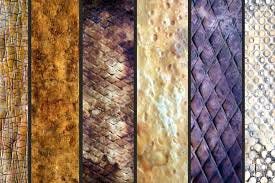
Source: https://fashnerd.com/2016/11/mycelium-redefining-leather-with-the-power-of-organic-technology/
Seven Powers cont.
The third of the Seven Powers in business is counter-positioning - a new company uses a business model that incumbents cannot pursue without damaging their existing business. So the startup gets protection from larger competitors through collateral damage, real or perceived.
So what are some examples in life sciences?:
In Alzheimer's (AD), most if not all incumbents in neuroscience have their business relying on the beta-amyloid hypothesis. So merely pursuing different pathways is a counter-positioning move in AD
In cancer diagnostics, the use of PCR-based methods dominated the market for ~2 decades and sequencing/genomics would cannibalize their market. Companies like Foundation Medicine did an incredible job to counter-position against incumbents and use this power to get a head start in genomics.
Clover Health and Devoted Health for focusing on aggregating patients rather than maximizing premiums; they make money on ancillary services
Adimab and antibody humanization IP where other companies could not pursue antibody humanization without infringing on competitor’s IP
Others?
Creating a new business model, especially one with strong counter-positioning, is pretty hard and executing successfully here is rare. New business models are the consequence of the convergence between markets, technologies, and founders. Some of the key themes for counter-positioning are:
New business model has lower costs or pricing power
Incumbents perceive collateral damage of pursuing a new business model too high
Or incumbents don’t have the technical capabilities to pursue the new business model
Product moats are stronger than financial moats
A committed founder to have the courage to pursue the new business model
Opportunities for counter-positioning exist from changing technology landscapes, consumers having misinformation, and poor incentives in product distribution
The new company with the new business model serves more and more customers until it is too late for the incumbent to have any shot at switching over
Counter-positioning against one incumbent could great opportunities for others to exploit (i.e. arms race)