
Axial - Observations #20
Life sciences reflections
Build with Axial: https://axial22.axialvc.com/
Axial partners with great founders and inventors. We invest in early-stage life sciences companies such as Appia Bio, Seranova Bio, Delix Therapeutics, Simcha Therapeutics, among others often when they are no more than an idea. We are fanatical about helping the rare inventor who is compelled to build their own enduring business. If you or someone you know has a great idea or company in life sciences, Axial would be excited to get to know you and possibly invest in your vision and company . We are excited to be in business with you - email us at info@axialvc.com
Observations #20
A set of ideas and observations from a week’s worth of work analyzing businesses and technologies.
The Genentech/Roche Interferon Deal
In the early 1970s and 1980s, interferon was seen as a potential holy grail in diseases. The signalling protein increases immune activity by up-regulating MHC expression. A key deal for Genentech was with Roche that centered on interferon that relied on a few things:
Cloning interferon was a race particularly between Genentech and Biogen. Genentech initially worked on insulin and HGH, which were more tractable than interferon and helped build out the company’s scientific capabilities.
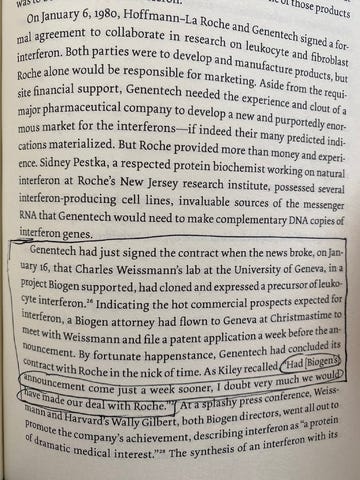
Genentech started working on interferon in 1978; however, getting a source of the protein was a major bottleneck for everyone. The company’s work in insulin and HGH was business validation for them to enter an R&D pact with Roche to gain access to cell lines that make enough interferon for scientists are Genentech to make RNA and cDNA libraries. Without this, Genentech really had limited options to get the interferon project started.
In January 1980, Biogen announced that they cloned interferon (albeit as a fusion). Genentech cloned interferon in April 1980. Genentech’s prior experience with insulin/HGH allowed the company to outrun Biogen despite losing out on the first milestone - Genentech was the leader in using cDNA and designing expression vectors; this reduced timelines from months to weeks for the company.
In this race, power within Biogen was held in the university labs while Genentech’s research was centered in the company itself. This was a major advantage for the latter to move quickly and get deals done.
The interferon race led to a interferon alpha medicine for Roche - https://www.rxlist.com/roferon-a-drug.htm#description - that became a great selling drug. Genentech kept interferon gamma, which wasn’t nearly as successful. Importantly, despite losing the race to clone interferon to Biogen, Genentech was still able to close out a more formalized drug deal for interferon with Roche due to the former’s advantages in downstream expression (from their work on lower risk projects in insulin and HGH), culture, and luck:
Measuring personal blood glucose responses to various foods
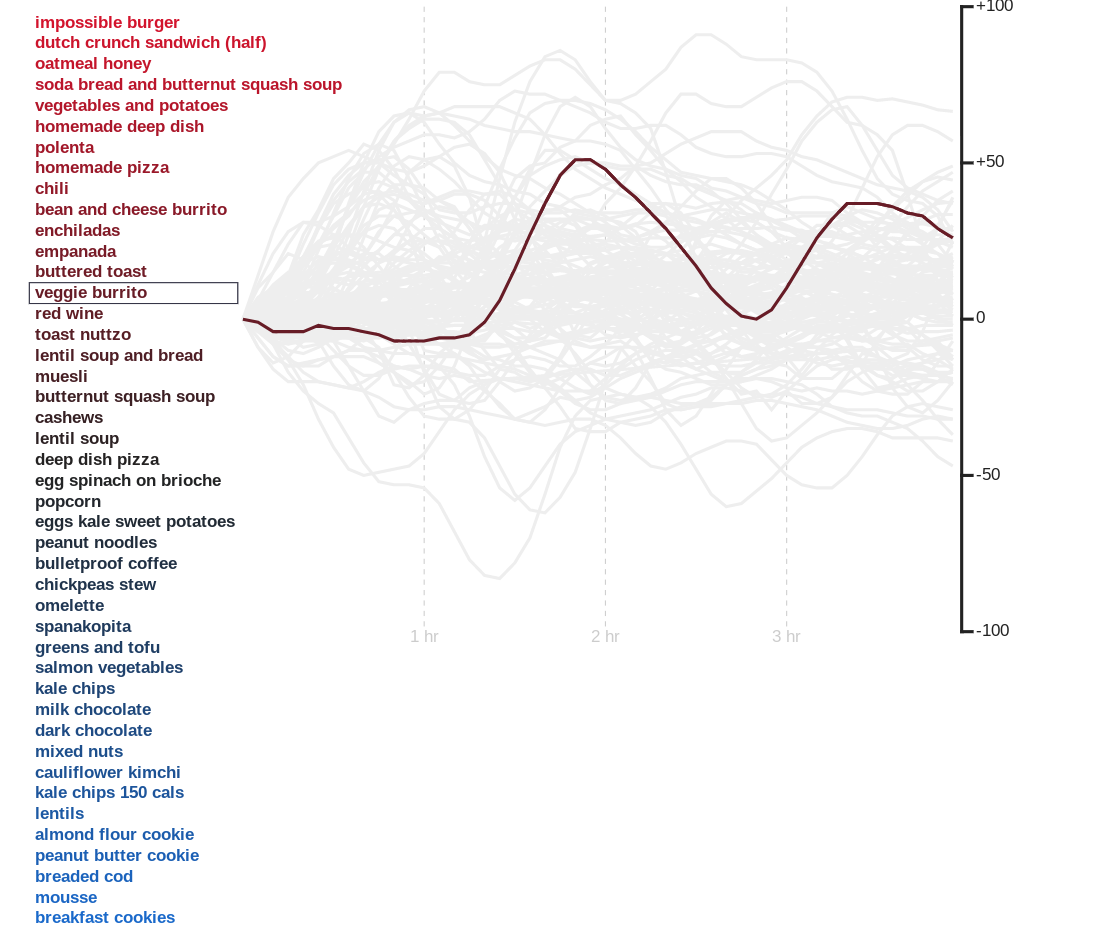
A friend of mine recently published a really awesome article on his use of a Dexcom monitor to measure his blood glucose response to various foods he ate among other things - http://blog.booleanbiotech.com/blood-glucose-and-food.html The piece is awesome/unique and speaks for itself.
Patent moats
As medicines become more complex, patents around things like manufacturing and formulation become just as important as IP around the molecule. Creating a generic antibody versus a small molecule is much harder because the company who got the antibody approved is often not willing to help generic manufacturers figure out manufacturing. This phenomenon will probably get worse as cell and gene therapies go generic. The on-market/generic system is very important for sustainable business models and patient-impact in medicine.
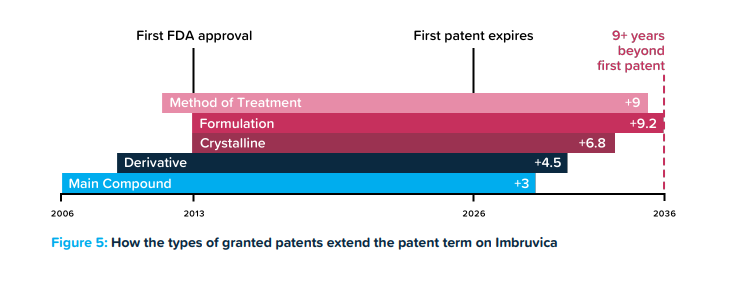
AbbVie is probably one of the best case studies of this playing out. Humira (anti-TNFalpha antibody for autoimmunity) is the best selling drug in the world, and AbbVie has extended their monopoly here with various patent filings post-approval. AbbVie is now doing something similar for their oncology drug, Imbruvica:
AbbVie filed a majority of Imbruvica’s patents after FDA approval
With over a 100 patents filed, they have extended patent protection on the medicine by 9 years
This equates to over $40B in more revenue for AbbVie
A recent analysis on this: https://www.i-mak.org/imbruvica/
As new medicines become more complex, will the generic system still be viable?
Reading clinical papers
What are the key levers to read and rigorously interpret clinical trial data and the corresponding papers?:
How is the data presented? Are the graphs presented honestly? Is all the data presented using means with 95% confidence intervals? Great papers show data in a way to help the reader understand the variability of the study.
Go to the methods section to see if the study is well-designed - things like using the standard-of-care as the comparator, patient arms are blinded correctly, among other things.
Is the study a test of non-inferiority, superiority, or equivalence?
Are the clinical trial subjects representative of the patient population? For example, a drug that wants to be a first-line treatment shouldn’t treat patients that failed prior regimes. This is an important issue in the COVID-19 vaccine trials - are the most at-risk populations being tested?
How many patients in each arm dropped out of the study? Be on the lookout for dropouts due to negative side effects or no benefit.
Make sure the study includes all patients that were intended-to-be-treated even if they dropped out of the study.
What data is missing and how is it presented? Make sure that patients that dropped out are counted as not meeting the endpoint.
Did the endpoints change during the trial? Make sure a study adheres to the guidelines set out before it was initiated.
Simply, and if the trial is well-designed, what is the P-value of the study to measure if an effect is significant? Often a P-value of .05 or below is considered statistically significant: there is a 5 out of 100 chance of seeing a difference by pure chance.
What is the effect size? Say a placebo has a response rate of 10% and a drug had one of 20%, to get an effect, 10 patients would have to be treated - 1/(.2-.1).