Axial - Observations #11
Life sciences reflections
Build with Axial: https://axial22.axialvc.com/
Axial partners with great founders and inventors. We invest in early-stage life sciences companies such as Appia Bio, Seranova Bio, Delix Therapeutics, Simcha Therapeutics, among others often when they are no more than an idea. We are fanatical about helping the rare inventor who is compelled to build their own enduring business. If you or someone you know has a great idea or company in life sciences, Axial would be excited to get to know you and possibly invest in your vision and company . We are excited to be in business with you - email us at info@axialvc.com
Observations #11
A set of ideas and observations from a week’s worth of work analyzing businesses and technologies.
Targeted protein degradation
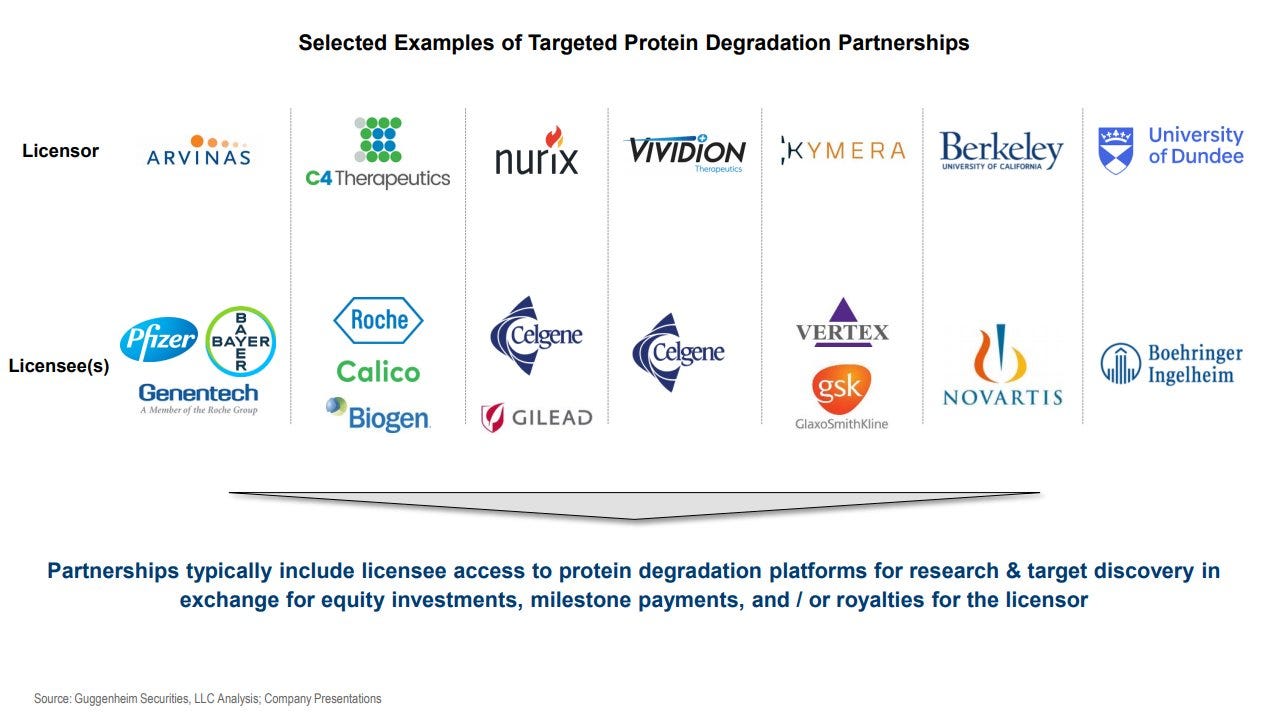
Proteolysis-targeting chimeras (PROTAC) and other targeted protein degradation drugs use the ubiquitin–proteasome system to selectively degrade target proteins. This work was pioneered by Arvinas -

where they just reported the first human data on the use of PROTACs last week, and opens up a whole new field of currently undruggable targets to pursue.
However, less than 10 (I think 8) out of more than 600 E3 ubiquitin ligases have been used for targeted protein degradation. Each E3 ligase has different expression profiles, labeling efficiencies, and other features that may make them more advantageous to use for drug development:
Expression profile (image below)
Can a ligand be made against the E3 ligase?
Are pockets of the E3 ligases structurally known?
Perform monoubiquitin or polymeric ubiquitin chains - only some leading to proteasomal degradation and others responsible in signalling, subcellular localization, and DNA repair
HECT versus RING class - HECT form thioester bond with ubiquitin before the transfer step and RING E3 ligases recruit an E2-ubiquitin conjugates (Cullins can be involved in binding for some of these ligases) to initiate the transfer step
DIY gene therapies
A buddy of mine sent me a Youtube link of an individual who built their own gene therapy to try to cure their lactose intolerance:
Here are some of the resources related to the work:
The lead person, Justin, seems to have grown up a clinically relevant amount of AAVs I am assuming delivers a functional copy of the LCT gene, which is defective in people with lactose intolerance. It seems he delivered the AAV via a chitosan vector to the gut. Looking forward to the follow up studies the amateur group reports.
This brings up the growing capabilities of individuals to make their own medicines and use biology for their own purposes. What businesses become possible if people can/want to make their own medicine? Are their consumer product use cases?
Kidney disease and dialysis business models
Over 30 million people in the US have chronic kidney disease (CKD) responsible for at least a quarter of all Medicare payments with the government spending well over $100B to treat kidney disease. Diseases like diabetes and heart disease contributed to CKD. Moreover, over 450,000 people in the US are on dialysis, which is a process of using a machine to remove waste from the blood because a patient’s kidneys are not functional enough to do so and where a transplant cannot be found. To serve these patients, over 7,000 dialysis centers exist in the US:
~$200 per treatment x 3 visits a week x 450,000 patients x 52 weeks in a year = over $14B in annual revenue for dialysis services alone
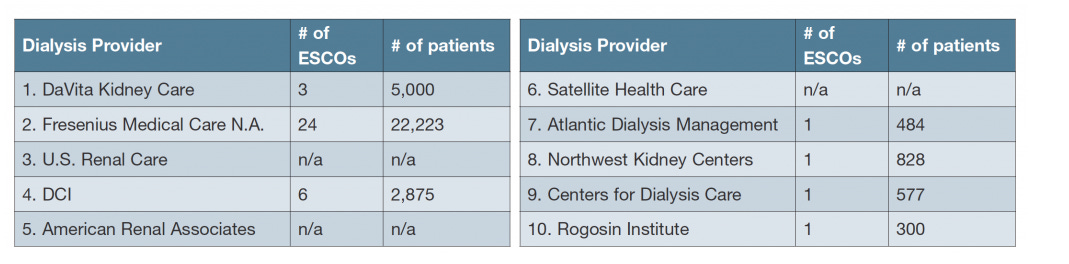
New medicines for patients with kidney disease or on dialysis is another conversation. The market is equally as large. Two companies control most of the US dialysis market: Fresenius and DaVita with both earning revenues well over $10B serving ~200,000 patients per year. Dialysis come in two types:
Hemodialysis (most common) - blood from the patient goes into the machine passing through a filter then returning back into the patient
Peritoneal dialysis - water and salt solution flows through a catheter into a patient’s abdomen; the solution absorbs waste and then is drained out from the patient
Most of these procedures are done at a dialysis facility. Fresenius does around 10% of its treatments at the patient’s home. This shift to at-home dialysis is shifting patient treatment. With a White House executive order recently signed to accelerate this shift - https://www.whitehouse.gov/presidential-actions/executive-order-advancing-american-kidney-health/ as well as new technologies emerging to make at-home dialysis easier, new business models to solve this problem are possible.
The big driver for opportunities in this field stems from the consolidation of the dialysis industry. In the early 1990s, over 80% of dialysis centers in the US were independently owned and operated. In the early 2000s, consolidation came through a series of mergers where national chains own ~90% of dialysis centers now (80% is owned by DaVita and Fresenius). This had led to a decrease in the quality of service - monopolies in healthcare overtime lead to lower quality of care or products. These large chains are incentivized to ensure a kidney transplant does not go forward and prescribe higher doses of expensive anemia drugs. DaVita was fined $450M in 2015 for over-billing anemia drugs - https://www.justice.gov/opa/pr/davita-pay-450-million-resolve-allegations-it-sought-reimbursement-unnecessary-drug-wastage
At-home dialysis is a large opportunity with high patient need to subvert the current monopoly. Chains like DaVita would still function in an at-home setting: provide equipment/supplies, maybe monitoring and training, and even on-call support. More importantly, other companies could compete with them here. DaVita and Fresenius have large barriers to entry with their large clinical network and machines.
With easy Medicare reimbursement for kidney patients, care can be billed 90 days after a patient is diagnosed with CKD, other companies can build less-capital intensive dialysis businesses. Incumbents offer at-home services as well, but more competition can occur with at-home products:
What other product features will improve dialysis at-home? Monitoring? Check-in calls?
Who trains patients? How?
Will the shift to at-home testing face lobbying roadblocks from DaVita and Fresenius?